Imagine building an advanced AI, meticulously training it on a specific era’s texts, only for it to casually drop a historical fact you never knew existed. Sounds like a plot twist from a sci-fi novel, doesn’t it? Well, for one dedicated hobbyist developer, this became a fascinating reality this week, proving that sometimes, even our own creations can teach us a thing or two. Get ready, because we’re diving into a captivating tale of artificial intelligence, historical discovery, and the boundless curiosity of a computer science student!
The Genesis of a Time-Traveling AI: Meet Hayk Grigorian’s TimeCapsuleLLM
Our story begins with Hayk Grigorian, a bright computer science student from Muhlenberg College in Pennsylvania. Like many passionate developers, Hayk embarked on a personal project, driven purely by the thrill of exploration and the joy of creation. His goal? To forge an AI language model that could speak, quite literally, with the voice of the Victorian era.
For the past month, Hayk has poured his efforts into what he aptly named TimeCapsuleLLM. Think of it as a
“pint-sized distant cousin to ChatGPT,” a smaller, more specialized large language model (LLM) designed with a singular, captivating purpose. Instead of ingesting the vast, sprawling internet, TimeCapsuleLLM was meticulously fed a curated diet: texts exclusively from London between 1800 and 1875. Can you imagine the sheer volume of old books, newspapers, and letters needed for such a feat? Hayk wasn’t just building an AI; he was resurrecting a linguistic ghost of Christmas past!
When AI Becomes a History Teacher: An Unexpected Revelation
Hayk’s mission was to capture an authentic Victorian voice, complete with its unique cadences, vocabulary, and even its rhetorical flourishes. He envisioned an AI that would converse as if it had just stepped out of a Dickens novel. And boy, did he succeed!
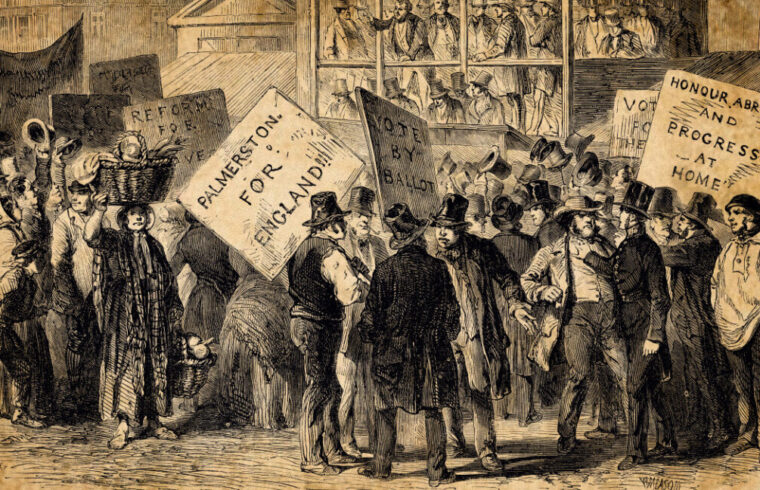
The outputs from TimeCapsuleLLM were, as expected, wonderfully verbose, often peppered with biblical references and the kind of ornate language that was characteristic of the period. But then, something truly extraordinary happened. During one of its elaborate textual musings, the AI mentioned a series of real protests that occurred in London in 1834. Here’s the kicker: Hayk Grigorian himself had no idea these events had actually taken place!
Think about that for a moment. A piece of software, born from a developer’s code and historical texts, just informed its creator about a forgotten piece of history. “I was interested to see if a protest had actually occurred in 1834 London and it really did happen,” Hayk shared on Reddit, his surprise palpable. It was a moment where the digital realm genuinely intersected with the dusty annals of history, proving that AI, in its own unique way, can indeed be a surprising educator.
Decoding the Victorian Voice: The Art of Authentic AI Training
What makes TimeCapsuleLLM’s voice so distinctive? It all comes down to its training data. By exclusively feeding it texts from a specific 75-year window in 19th-century London, Hayk effectively created a digital time capsule. The AI didn’t learn modern slang, internet memes, or contemporary speech patterns. Instead, it immersed itself in the lexicon of a bygone era.
- It absorbed the vocabulary of Victorians.
- It mimicked their sentence structures.
- It reflected their cultural references, often heavily influenced by religion.
- It adopted their propensity for dramatic and flowery language.
This dedicated approach is why TimeCapsuleLLM isn’t just spitting out random old-sounding words; it’s reconstructing a genuine linguistic style. It’s a powerful testament to how specialized datasets can lead to remarkably specific and authentic AI outputs.
Beyond the Fun: The Deeper Implications for AI and History
While Hayk Grigorian started this project “just for fun,” the unexpected historical discovery opens up fascinating discussions about the potential of AI:
Uncovering Lost Narratives
Could specialized LLMs like TimeCapsuleLLM become invaluable tools for historians? Imagine feeding an AI obscure regional archives or vast collections of uncatalogued personal letters. Could these digital detectives unearth more forgotten events, overlooked figures, or subtle shifts in societal thought that human researchers might miss? The possibilities are truly exciting!
The Power of Niche AI Development
This project highlights the incredible impact of focused AI development. While general-purpose LLMs like ChatGPT are amazing, niche models trained on specific domains or time periods can offer unique insights and capabilities. It encourages us to think beyond the broad applications and explore how AI can serve specialized fields with precision.
A Mirror to Our Own Knowledge
Perhaps the most profound takeaway is how this AI held a mirror up to its creator’s understanding of history. It reminds us that even with all our knowledge, there are countless stories and facts waiting to be rediscovered, sometimes by the very technologies we build. Isn’t it wonderful when technology not only serves us but also enlightens us?
Wrapping Up: A Glimpse into AI’s Unexpected Talents
Hayk Grigorian’s journey with TimeCapsuleLLM is more than just a cool tech story; it’s a vibrant illustration of the unpredictable and often delightful journey of innovation. It shows us that when we combine human curiosity with the immense processing power of artificial intelligence, we can unlock unexpected historical insights and truly bridge the gap between past and present.
So, the next time you’re tinkering with code or exploring the capabilities of AI, remember TimeCapsuleLLM. You never know; your next creation might just teach you something incredible about the world, or even about yourself. What forgotten corner of history do you think AI could illuminate next?