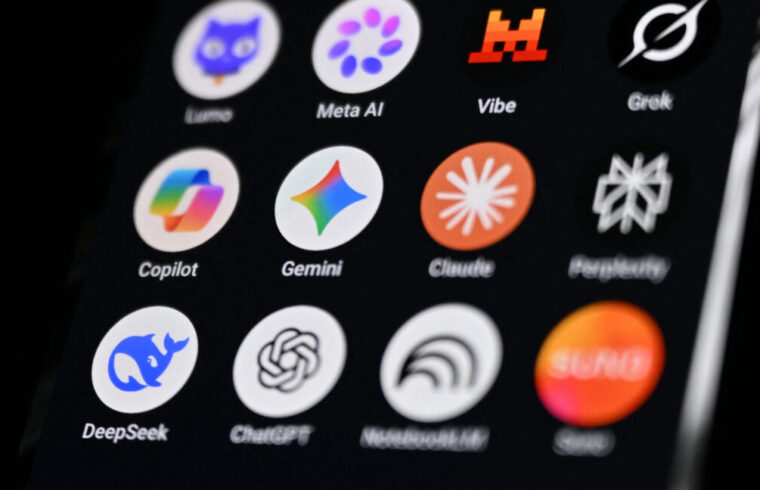
Ever felt the thrill of innovation, only to have it tempered by the steep price tag? Welcome to the world of Artificial Intelligence, where a seismic shift is underway. For a while now, advanced AI models have been the exclusive playground of those with deep pockets. But hold onto your hats, because things are changing faster than you can say “generative AI.” We’re currently witnessing a fascinating price war, as leading American AI powerhouses like OpenAI and Anthropic are aggressively slashing the costs of their cutting-edge models. Why, you ask? Because they’re fighting tooth and nail to keep you, the cost-conscious customer, from flocking to surprisingly capable and much cheaper alternatives offered by their Chinese counterparts.
Think of it like this: imagine you’ve been driving a luxury car with all the bells and whistles, but the fuel costs are through the roof. Suddenly, a new brand emerges, offering a car that’s nearly as good, sips fuel, and comes with a significantly lower price. Wouldn’t you be tempted to switch? That’s precisely the dilemma many businesses are facing right now in the AI landscape.
The Rising Cost of Innovation: Why AI Bills Are Causing Headaches
For many companies, the initial excitement of integrating AI into their operations has slowly given way to a more sobering reality: the bills are piling up. Training and running sophisticated AI models, especially at scale, can be incredibly expensive. This isn’t just about the upfront investment; it’s about the ongoing operational costs that can eat into budgets faster than a hungry LLM devouring data.
As these hefty AI expenses mount, companies worldwide are naturally seeking ways to optimize their usage and, crucially, find more affordable options. It’s a classic economic principle, isn’t it? High demand, high prices, but then competition kicks in. And in this case, the competition is coming in strong from the East, with Chinese developers making significant inroads.
Enter the Challengers: Chinese AI Firms Gain Global Traction
While OpenAI and Anthropic have dominated headlines for their groundbreaking work, a new wave of innovation is emerging from China. Developers like Moonshot and DeepSeek aren’t just creating cheaper models; they’re delivering impressive performance that’s starting to turn heads from the heart of Silicon Valley to bustling European tech hubs. These firms are cleverly positioning themselves as viable, high-value alternatives for businesses unwilling to compromise on quality but desperate to manage their AI spending.
This isn’t just a localized skirmish; it’s a global battle for market share. As companies realize they can get nearly comparable AI capabilities at a fraction of the cost, switching allegiances becomes an increasingly appealing option. And who can blame them? Every business is looking for an edge, and cost efficiency is often a major one.
US Giants Respond: Drastic Price Cuts and New Models
The established US players aren’t sitting idly by. They’re responding with aggressive strategies to defend their turf. Take OpenAI, for instance, a name synonymous with cutting-edge AI. They recently announced a stunning 80 percent price reduction for their GPT-5.6 Luna model. They’re not just calling it their “fastest and most affordable model”
— they’re making it genuinely accessible. Can you imagine an 80% discount on anything? That’s not just a minor adjustment; it’s a declaration of war.
Not to be outdone, Anthropic, another key player, has rolled out its Claude Opus 5. Their message is clear: you can get “frontier intelligence” from this system, but at “half the price” of their previously most capable model, Fable 5. This isn’t just about offering a budget option; it’s about making their most advanced capabilities available to a broader audience without breaking the bank.
These moves aren’t charity; they’re strategic chess moves in a high-stakes game. By lowering prices, OpenAI and Anthropic are hoping to stem the tide of customers switching to cheaper alternatives, proving that they can offer both unparalleled performance and competitive value.
What Does This Mean for You and the Future of AI?
So, what does this ongoing price war signify for the broader AI landscape, and more importantly, for your business or project? We believe it’s a wonderfully exciting development for several reasons:
- Democratization of AI: Cheaper models mean more businesses, regardless of size, can finally harness the power of advanced AI. This could ignite an explosion of innovation across various sectors.
- Increased Competition, Better Products: When companies fight for your business, you win. This fierce competition will push all players to not only lower prices but also continuously improve their models, offering better performance, efficiency, and features.
- Focus on Value: It forces everyone to think beyond raw performance and consider the overall value proposition. Which model gives you the best return on investment for your specific needs?
Are we entering an era where powerful AI is no longer a luxury but a readily available utility? It certainly feels that way. This price war isn’t just about a few companies battling it out; it’s a clear signal that the AI industry is maturing. It’s moving from an exclusive club to a more inclusive ecosystem, where innovation and affordability go hand in hand.
As AI continues to evolve, keeping an eye on these pricing shifts will be crucial for any organization looking to leverage this transformative technology efficiently. The future of AI is not just intelligent; it might finally be affordable. What do you think about these developments? Are you ready to dive deeper into the world of accessible AI?