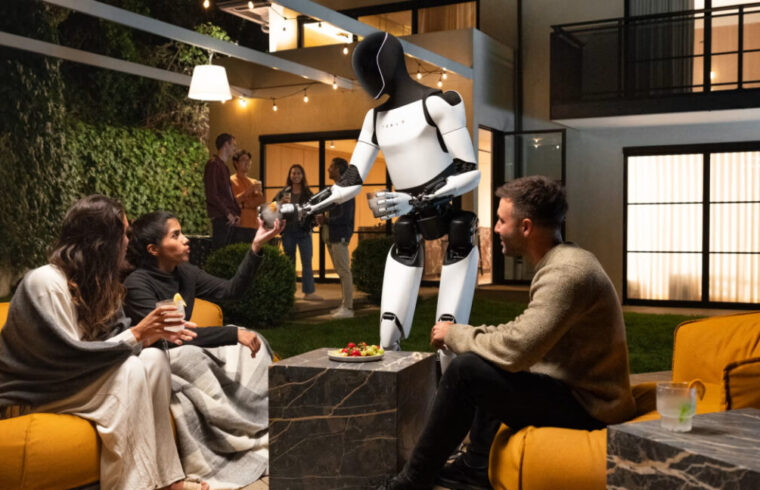
Indeed, when a visionary like Rodney Brooks – a man who has dedicated decades of his life to constructing humanoid machines and pushing the boundaries of artificial intelligence – recommends you stand at least nine feet away from any full-sized walking robot, you’d be wise to pay attention. We’re not talking about a casual suggestion here; this is a stark warning from someone who intimately understands the potential power and perils of these magnificent machines.
The Unsettling Truth from a Robotics Legend
Rodney Brooks, a name synonymous with innovation in robotics, isn’t just any voice in the crowd. He’s the MIT professor emeritus who co-founded iRobot, the company that brought us the ubiquitous Roomba, and also Rethink Robotics. His insights aren’t based on fear-mongering but on a deep, scientific understanding of what makes these complex systems tick – and sometimes, unfortunately, stumble.
In a compelling technical essay titled “Why Today’s Humanoids Won’t Learn Dexterity” published recently on his blog, Brooks didn’t mince words. He unequivocally stated, “My advice to people is to not come closer than 3 meters to a full-size walking robot.” That’s roughly nine feet, folks! He goes on to emphasize that “Until someone comes up with a better version of a two-legged walking robot that is much safer to be near, and even in contact with, we will not see humanoid robots get certified to be deployed in zones that also have people in them.” Think about that for a moment. This isn’t just about avoiding a clumsy bump; it’s about fundamental safety concerns that currently prevent humanoids from sharing our spaces.
Why Bipedal Humanoids Are a Walking Hazard (Literally!)
So, what exactly makes these impressive bipedal machines so potentially dangerous, according to Brooks? It boils down to a fundamental law of physics:
kinetic energy.
The Hidden Power of Kinetic Energy
Imagine a fully-grown adult, weighing hundreds of pounds, standing upright. Now imagine that adult is a complex machine, constantly shifting its weight, making micro-adjustments to maintain balance, and moving its limbs with powerful motors. As these robots walk, each step, each sway, each pivot generates a significant amount of kinetic energy. This is the energy of motion, and it can be a formidable force.
Think of it like a bowling ball. When it’s sitting still, it’s harmless. But once it’s in motion, even at a relatively slow speed, it carries enough kinetic energy to knock down pins with considerable force. Now, scale that up to a life-sized robot, potentially weighing far more and moving its limbs through the air. If such a machine were to suddenly fall, or if one of its powerful limbs were to strike an unsuspecting person, the stored-up kinetic energy could inflict severe, even life-threatening, injuries. It’s not malice; it’s physics.
The Elusive Goal of “Safe” Human-Robot Coexistence
This kinetic energy issue isn’t just a hypothetical problem; it’s a fundamental hurdle preventing humanoid robots from truly integrating into human environments. Brooks highlights that until engineers develop a “better version” – one that is inherently safer, even in close contact – these robots won’t receive the necessary certifications for deployment in shared spaces. Picture a factory floor, a hospital, or even your home. Would you feel truly safe with a multi-hundred-pound machine, constantly in motion, just a few feet away, knowing the potential for accidental impact?
The challenge is immense. Designing a bipedal robot that is robust enough to perform complex tasks, yet inherently “soft” and safe enough to operate intimately alongside humans, requires breakthroughs in materials science, control algorithms, and perhaps even entirely new paradigms of locomotion. It’s a question of predicting and mitigating every possible failure mode, every potential bump, every unexpected interaction.
An “Expensive Fantasy”? Brooks’ Skepticism on Current Investments
Brooks doesn’t just issue a warning; he expresses concern that companies pouring billions into humanoid development are “chasing an expensive fantasy.” Why such a strong statement? Because, from his perspective, many current efforts seem to prioritize dexterity and impressive locomotion over the foundational problem of safety in human-centric environments.
Are we, as an industry, getting ahead of ourselves? Are we too captivated by the vision of a human-like robot companion or worker, perhaps overlooking the critical, ground-level engineering challenges that must be overcome first? Brooks argues that until we solve the fundamental safety questions – specifically, how to manage that immense kinetic energy – widespread deployment in human zones remains a distant dream, regardless of how many billions are invested. It’s a powerful critique, urging us to reconsider our priorities in the race for advanced robotics.
What Does This Mean for the Future of Robotics?
Rodney Brooks’ cautionary words serve as a vital reality check for the burgeoning humanoid robotics industry. They force us to ask: What truly constitutes progress? Is it building the fastest, most agile robot, or is it building the safest and most reliable one for human interaction?
His insights suggest that a paradigm shift might be necessary. Instead of merely striving for human-like movement, perhaps the focus needs to be on inherently safe designs, alternative locomotion methods for human-shared spaces, or even entirely new ways for robots and humans to collaborate without direct physical proximity. This isn’t to say humanoids are a dead end; rather, it’s a call to re-evaluate the path we’re currently on and invest in the foundational science that truly enables safe integration.
Bridging the Gap: What’s Next for Humanoid Safety
So, what does a safer future for humanoids look like? It might involve:
- Developing advanced “soft robotics” that can absorb impact without transferring dangerous force.
- Implementing ultra-fast sensing and predictive algorithms that can anticipate collisions and react instantly.
- Creating intelligent safety zones that automatically slow or halt robots when humans enter proximity.
- Rethinking robot construction with lighter, yet durable, materials.
Ultimately, Brooks’ warning isn’t about stopping innovation; it’s about guiding it responsibly. It’s about ensuring that as we push the boundaries of what robots can do, we never compromise on the safety and well-being of the people who will live and work alongside them. Because after all, what good is a revolutionary technology if it poses an unnecessary risk?