We live in an era obsessed with digital innovation. Every other week, a new app or software promises to revolutionize our workflows, streamline collaboration, and supercharge decision-making. We pour countless resources into these digital solutions, always chasing that elusive edge in workplace efficiency. But what if the biggest hurdle isn’t digital at all, but something far more fundamental and, ironically, often overlooked? We’re talking about noise pollution in the office.
You see, while our screens glow with promises of a better future, a persistent, physical antagonist continues to chip away at our focus and well-being: unmanaged sound. It’s the hum of conversations, the clatter of keyboards, the impromptu video call next door – a cacophony that silently erodes our capacity to do our best work. This isn’t just an annoyance; it’s a significant threat to productivity and employee satisfaction. The good news? The solution is already here, and it’s more integrated than you might think.
The Silent Productivity Killer: Why Noise Dominates Our Workplaces
After diving deep into workplace design research, dissecting hybrid meeting guidelines, and scrutinizing acoustic performance standards, a strikingly clear pattern emerges: offices simply perform better when sound is treated as part of the infrastructure, not an afterthought. For too long, we’ve designed offices with visual aesthetics and space utilization in mind, often completely neglecting the auditory experience.
More Than Just Annoyance: The Deep Impact of Office Noise
Let’s be brutally honest: noise in today’s office isn’t just a minor irritation that you “get used to.” It’s a relentless assault on our cognitive functions. It directly impacts our ability to concentrate, erodes our sense of privacy, and significantly degrades the quality of our day-to-day communications. Have you ever struggled to hear a client on a phone call because of background chatter? Or found yourself re-reading the same paragraph five times thanks to a colleague’s booming voice?
Consider this compelling statistic: a JLL report reveals that a staggering 58% of employees still perceive their home environment as superior for focused work. Even more telling, over a quarter specifically cite office noise and the inability to focus as primary drivers for choosing to work remotely. And here’s the kicker: many workers still dedicate over half their time to individual tasks, even in collaborative-first office designs. This isn’t just about comfort; it’s about fundamental workflow efficiency.
From Afterthought to Blueprint: Rethinking Office Sound Design
This critical understanding is fueling a fascinating shift, driving immense interest in an entirely new class of workplace products. The concept of “smart furniture” is no longer confined to merely height-adjustable desks or charging ports subtly built into tabletops. Oh no, it’s evolved into something far more sophisticated and impactful.
Introducing the New Era of Smart Acoustic Furniture
Today’s smart furniture for offices now encompasses a broad spectrum of solutions: think innovative booths, meticulously designed acoustic panels, specialized desks, adaptable dividers, and advanced seating systems. Their primary mission? To actively manage sound while seamlessly integrating into the sleek, modern office layouts we’ve come to expect. In essence, furniture is transcending its traditional role of simply filling space; it’s now engineered to actively improve how the space performs.
This is precisely where sound-absorbing furniture and comprehensive acoustic solutions for offices move beyond being a mere design trend. They offer businesses a powerful, flexible pathway to regain sound control without resorting to a regressive return to rigid rows of enclosed offices. Instead of undertaking disruptive, costly floor plan renovations, teams can leverage strategically designed furniture that intelligently softens noise, establishes necessary boundaries, and elegantly supports both focused solo work and dynamic group interactions.
The Hard Truth: How Noise Drives Employees Away
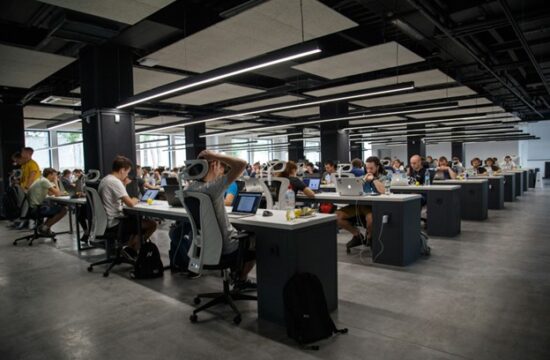
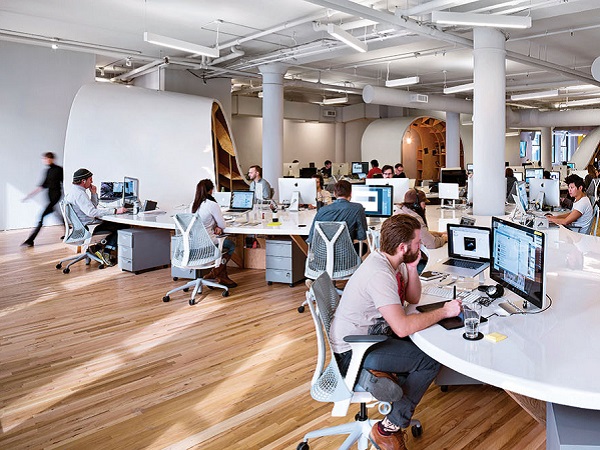
Why does physical design matter so profoundly? Picture this: an office adorned with hard surfaces, sprawling open layouts, and shared desks. What happens? Sound travels further, lingers longer, and echoes with unrelenting persistence. Conversations from one workstation bleed effortlessly into another. The scraping of a chair against the floor becomes an unwelcome participant in every crucial call. A space might radiate a sleek, modern aesthetic, yet it could be subtly, but surely, working against the very people who inhabit it.
Mastering the Hybrid Harmony: Acoustics for the Modern Workspace
This newfound flexibility is absolutely paramount in our evolving hybrid workplaces. Offices are no longer single-purpose arenas; they must fluidly support heads-down individual work, spontaneous collaboration, and crystal-clear video meetings—all within the same footprint. Traditional office furniture was never engineered to withstand such demanding acoustic requirements. But guess what? Smart acoustic furniture is.
The truly “smart” products in this burgeoning category aren’t just intelligent because they boast sensors or integrated power outlets. No, their true brilliance lies in being engineered with acoustic performance in mind from the very outset. It’s a foundational principle, not an added accessory.
Cisco’s current guidance for video-enabled workspaces vividly illustrates the gravity of this challenge. They stipulate that video conferencing rooms demand stricter acoustic conditions than standard rooms, necessitating meticulous attention to reverberation, background noise, and sound insulation. Cisco specifically recommends ambient noise levels not exceeding 30 dBSPL in these critical spaces. And here’s a fascinating insight: poor acoustic conditions may often be far more glaringly obvious to participants on the far end of a call than to those physically present in the room. This is a monumental clue for contemporary office design: the modern office is judged not merely by how it sounds to its occupants, but crucially, by how it sounds through a microphone.
The Quiet Revolution: How Acoustic Furniture Transforms Your Space
So, how are manufacturers tackling this complex symphony of sound? The answer lies in technology-driven fabrication. Advances in manufacturing now allow for the creation of furniture with more precise shapes, intelligently layered materials, and seamlessly integrated surfaces specifically designed to absorb or redirect sound waves. This means acoustic treatment is no longer confined to walls or ceilings. Instead, performance is meticulously built into every element: privacy booths, elegant screens, comfortable banquettes, workstation dividers, and even overhead structures.
This innovative approach fundamentally redefines the role of furniture. Imagine a table that doesn’t just hold items but actively helps define a meeting zone. Envision a high-back sofa that gracefully reduces sound spill. Picture a workstation screen that dramatically improves speech privacy. Or a dedicated booth that provides a consistently dependable, acoustically optimized setting for virtual calls, all without the upheaval of a full-scale renovation.
Performance, Not Just Comfort: The Business Case for Better Acoustics
The ultimate outcome of this acoustic revolution? A profoundly more adaptable, more functional office environment. Businesses gain targeted acoustic control precisely where it’s needed most, and employees are empowered with spaces that feel inherently more usable and supportive from the moment they step in.
It’s tempting to categorize acoustics purely as a comfort issue, a nice-to-have amenity. But in reality, it is inextricably linked to performance issue. A field study published in the Journal of Environmental Psychology uncovered a compelling link: improved acoustical conditions in open-plan offices were directly associated with lower perceived disturbances and significantly reduced cognitive stress. The study further highlighted that even minor declines in room acoustics negatively impacted how employees rated their overall health and their experience of disturbances at work.
Your Roadmap to a Quieter, More Productive Office
This research carries immense weight for businesses striving to make the office a truly compelling destination once more. If employees arrive at a space where focus feels like an uphill battle, meetings become exhausting, and privacy is a luxury, the office quickly transforms into a source of friction. However, if that same space actively nurtures concentration and fosters clearer communication, it metamorphoses into a powerful tool, a truly useful environment.
Smart acoustic furniture steps in as a hero, solving a multitude of complex problems simultaneously:
- It reduces distraction in bustling open areas.
- It improves speech clarity in crucial meeting zones.
- It creates a demonstrably better sound environment for essential video calls.
- Crucially, it provides office planners with a highly modular way to improve performance without requiring disruptive, major construction projects.
A Modular Approach: Flexibility in Acoustic Solutions
That final point is incredibly significant. Many companies simply cannot afford to halt operations for a complete office overhaul. Furniture-based acoustic upgrades, however, offer remarkable flexibility. They are much easier to phase in, test, and expand as needed. They can be strategically deployed around known problem areas, then adjusted and reconfigured as teams evolve and business needs shift. This makes acoustic furniture a highly practical, strategic investment for employers, far beyond a mere cosmetic upgrade. For employees, it simply makes the office a more effective tool for the work they actually perform.
The Future is Clear (and Quiet): Investing in a Better Workplace
Workplace innovation, dear reader, isn’t just about the latest software release. It’s equally—if not more—about crafting superior physical spaces. As modern offices continue to juggle the delicate balance between fostering collaboration, supporting deep focus, and facilitating seamless hybrid meetings, our furniture needs to do more than merely occupy a room. It must actively improve how that room works.
Businesses that embrace this paradigm shift—those that treat acoustics as an integral part of overall workplace performance, rather than just an aesthetic design element—will undoubtedly be better positioned. They will be the leaders in creating offices that genuinely support productivity, foster well-being, and ultimately, become vibrant, effective hubs for innovation, every single day.