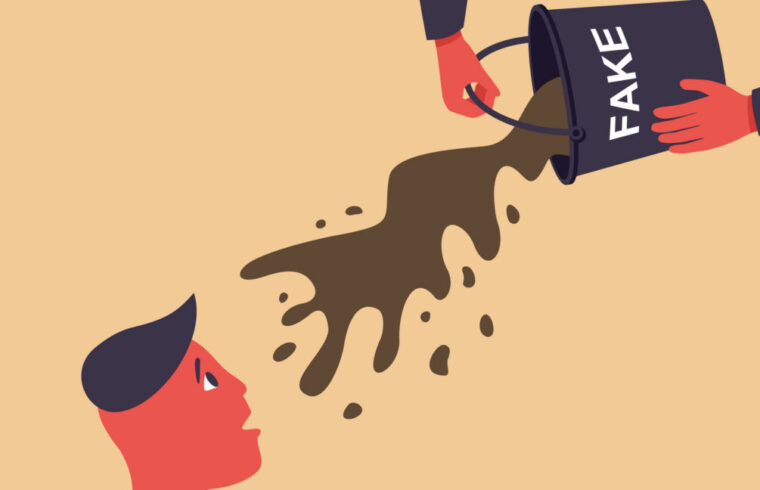
Remember when generative AI felt like a futuristic dream, a tool promising boundless creativity and efficiency? Well, like any powerful tool, it turns out that AI can be a bit of a double-edged sword. We’ve certainly seen its incredible potential, but we’ve also begun to witness its darker side. And when the misuse of a technology becomes so pervasive, so undeniably obvious, that even a major dictionary takes notice, you know it’s not just a passing trend—it’s a bona fide cultural phenomenon that’s shaping our digital lives.
That’s exactly what happened when, on a recent Sunday, Merriam-Webster made a groundbreaking announcement: its 2025 Word of the Year is none other than “slop.” Yes, “slop.” A word that, at first glance, might conjure images of farm animals or messy food. But in the digital age, it has taken on a profoundly relevant and, dare I say, unsettling meaning. It has become the go-to shorthand for the overwhelming flood of low-quality, often nonsensical, AI-generated content that has begun to clog our social media feeds, pollute our search results, and generally muck up the internet as we know it.
A Tsunami of Text: Understanding the “Slop” Phenomenon
So, what exactly is this “slop” Merriam-Webster is talking about? They define it quite succinctly as “digital content of low quality that is produced usually in quantity by means of artificial intelligence.” Think about that for a moment. It’s not just about bad writing; it’s about content churned out in vast quantities by machines, often lacking nuance, context, or genuine human insight. It’s like an endless river of diluted, tasteless soup, filling every digital bowl we hold out.
Greg Barlow, the president of Merriam-Webster, perfectly captured the sentiment when he remarked that “It’s such an illustrative word.” He noted its connection to AI, a truly transformative technology, and how “slop” embodies something many people find both fascinating and, frankly, “annoying, and a little bit ridiculous.” Have you felt that annoyance? Have you scrolled past articles that just felt… off? Chances are, you’ve encountered some “slop” yourself.
The Ubiquity of Low-Quality AI Content
Where exactly are we seeing this digital “slop” manifesting? It’s not hiding in obscure corners of the web; it’s right there in front of us, often disguised as legitimate information or engaging entertainment. Let’s break down some of its prime habitats:
Where Do We See This “Slop”?
- Search Engine Results: Have you ever searched for a specific piece of information, only to be met with page after page of articles that seem to say a lot without actually saying anything? Many of these are AI-generated, designed purely to rank, not to inform.
- Social Media Feeds: From generic “inspirational” posts to thinly veiled product promotions, AI tools are churning out endless streams of content on platforms like X (formerly Twitter), Facebook, and Instagram. It fills the void, but does it truly add value? Probably not.
- Even News Aggregators and Blogs: Alarmingly, some less scrupulous sites are leveraging AI to generate entire articles on trending topics, often regurgitating existing information with little to no fact-checking or original thought. This poses a serious threat to information credibility.
The core issue here is not just the volume, but the quality. This deluge of bland, often inaccurate, text-based content dilutes the overall information landscape. It makes it harder for you, the reader, to find truly valuable, well-researched, and thoughtfully written material. It’s like trying to find a pearl in an ocean of pebbles.
Why “Slop” Matters: Beyond Just Annoyance
You might think, “So what if some AI content isn’t perfect? It’s just the internet, right?” But the implications of widespread “slop” go far beyond mere annoyance. They touch upon fundamental aspects of how we consume information and perceive the digital world.
Diluting the Digital Landscape
Imagine visiting your favorite online community or news site, only to find it increasingly populated by content that feels robotic, repetitive, and utterly devoid of genuine human voice. This isn’t just about personal preference; it’s about the erosion of the unique, diverse, and authentic voices that once made the internet such a rich tapestry of human expression. When AI-generated content overtakes human-created content, we lose that vital spark.
The Trust Deficit
Perhaps the most significant long-term consequence is the potential for a massive trust deficit. If we can no longer easily discern between human-written, factual content and AI-generated “slop”, how can we trust any information we encounter online? This can lead to increased cynicism, misinformation, and a general distrust of digital sources. As consumers, we have a right to expect a certain level of integrity from the content we engage with.
Navigating the “Slop”: A Call for Critical Engagement
So, faced with this rising tide of AI-generated “slop,” what are we to do? Do we simply throw up our hands in despair? Absolutely not! This is a call for critical engagement and a sharpening of our digital literacy skills.
As readers, we must become more discerning. Ask yourself: Does this article sound genuinely human? Are the facts presented with nuance and proper sourcing? Does it evoke a real emotional response or offer a truly novel perspective? Developing a keen eye for the hallmarks of AI-generated content—its often generic phrasing, repetitive structures, and lack of true depth—is becoming an essential skill in our hyper-connected world.
For content creators, this also presents an opportunity. While AI can certainly aid in certain aspects of creation, focusing on producing genuinely valuable, deeply researched, and uniquely voiced content will set you apart. In a world awash with “slop,” authenticity and quality will be your most powerful allies.
Merriam-Webster crowning “slop” as the 2025 Word of the Year isn’t just a quirky linguistic observation. It’s a stark reminder of the profound impact generative AI is having on our information ecosystem. It challenges us to reflect on the future of content, the importance of human creativity, and our collective responsibility to demand better. Let’s work together to ensure the digital landscape remains a vibrant, trustworthy source of knowledge and connection, not just a trough filled with low-quality “slop.”









