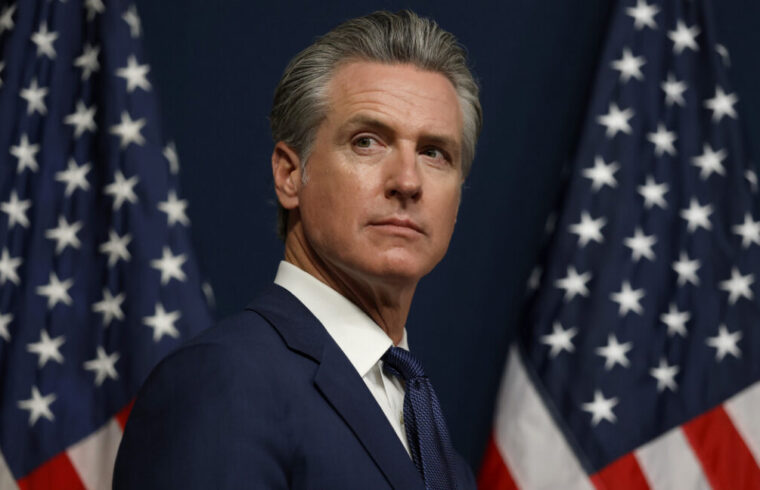
Hey there, tech enthusiasts and policy watchers! We’ve all been talking about the accelerating pace of artificial intelligence, right? And with that rapid growth comes the inevitable question: how do we keep it safe and accountable? Well, California, always at the forefront of innovation and regulation, just made a significant move. This past Monday, Governor Gavin Newsom signed the Transparency in Frontier Artificial Intelligence Act (S.B. 53) into law. But what does it really mean for the future of AI safety and the mighty tech giants shaping our digital world?
This new legislation aims to pull back the curtain on AI safety practices, asking companies to disclose their methods. Sounds promising, doesn’t it? However, as we dig a little deeper, we start to see that this new law notably stops short of mandating actual, rigorous safety testing. If you’re thinking, “Hold on, didn’t we just go through something like this?”, you’d be absolutely right!
Unpacking S.B. 53: Transparency Without Teeth?
So, what exactly does S.B. 53 entail? At its core, it requires AI companies raking in annual revenues of at least $500 million to publish their safety protocols on their websites. Furthermore, they’ll need to report any significant incidents to state authorities. On the surface, this sounds like a step in the right direction – more transparency is always good, right?
However, here’s where things get a bit murky. While companies must describe how they incorporate “national standards, international standards, and industry-consensus best practices” into their AI development, the law remains curiously vague. It doesn’t actually specify what those standards are, nor does it demand any independent verification of these self-reported practices. It feels a bit like being asked to describe your swimming technique without ever actually getting into the pool to prove you can swim. For such a critical and rapidly evolving field, one might expect a bit more concrete enforcement.
A Familiar Battle: The Echoes of S.B. 1047
If you’re wondering why this new law feels a little less robust than you might hope, let’s cast our minds back. S.B. 53, remember, effectively replaces a previous, much more ambitious attempt at AI regulation: Senator Scott Wiener’s S.B. 1047. That bill, which many hailed as a true step towards comprehensive safety, would have required mandatory safety testing and even “kill switches” for AI systems deemed to pose significant risks. Imagine having a digital emergency brake for potentially runaway AI – that was the vision.
But alas, S.B. 1047 met its demise. Governor Newsom vetoed it last year after a rather intense period of heavy lobbying from powerful tech companies. Did Big Tech simply not want the burden of stringent safety checks? Were they afraid it would stifle innovation? Whatever the reasons, the outcome was clear: a significantly watered-down version is now the law of the land. It makes you wonder, doesn’t it, about the true influence of corporate power in shaping legislation meant for public good?
The Governor’s Stance: Navigating a Complex Landscape
Governor Newsom, in a statement, expressed his belief that “California has proven that we can establish regulations to protect our communities while also ensuring that the growing AI industry continues to thrive.” And we certainly appreciate that sentiment. Balancing protection with progress is undoubtedly a monumental task.
However, when the protective measures largely revolve around self-reporting and voluntary adherence to unspecified standards, beyond basic incident reporting, one has to ask: Are we truly protected, or are we simply relying on the goodwill of powerful corporations? It’s a bit like giving a teenager the keys to a brand new car and telling them to “drive safely” without ever actually teaching them how to drive or testing their skills. We trust they’ll do the right thing, but where’s the accountability?
What Does This Mean for the Future of AI (and Us)?
For AI companies, especially those exceeding the $500 million revenue mark, this law adds a new layer of administrative work. They’ll need to formalize and publish their safety protocols. For us, the users and the public, it means a slightly clearer picture of what these companies say they’re doing for safety. But let’s be honest, it’s not the ironclad guarantee many advocates for AI safety were hoping for.
This legislation highlights the ongoing tension between rapid technological advancement and the crucial need for robust oversight. California, often seen as a bellwether for tech policy, has chosen a path that prioritizes transparency over stringent, independently verifiable safety testing. Is this the right move? Only time will tell if this approach genuinely safeguards us from the potential risks of frontier AI, or if it simply gives the industry more leeway without sufficient accountability. It’s a fascinating, if somewhat concerning, tightrope walk that we’ll all be watching closely.