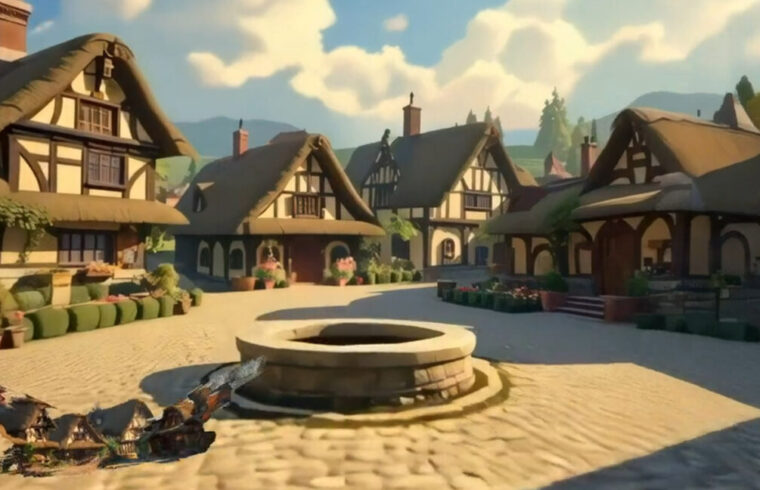
Have you ever looked at a photograph and wished you could just step inside it? To move around, explore the scene from different angles, and truly experience it as if you were there? Well, prepare to have your mind a little bit blown, because Tencent has just pulled back the curtain on something truly extraordinary. On Tuesday, their Hunyuan team unveiled HunyuanWorld-Voyager, an open-weights AI model that’s not just generating videos, but allowing us to virtually pilot a camera through scenes conjured from a single still image! We’re talking about 3D-consistent video sequences that feel incredibly real, without the need for traditional, complex 3D modeling.
Unveiling HunyuanWorld-Voyager: Your Personal Virtual Tour Guide
So, what exactly makes HunyuanWorld-Voyager a game-changer in the world of generative AI? Imagine feeding the system a single, static image. Now, imagine telling that system, “Okay, I want to move forward, then turn right, and look up.” In response, HunyuanWorld-Voyager doesn’t just animate the picture; it intelligently generates a video sequence that makes it seem like a camera is actually navigating a virtual scene. This isn’t just a simple pan and zoom; it’s an immersive journey!
The true genius here lies in its ability to simultaneously generate both RGB video (the colors and visuals we see) and crucial depth information. Why is that important, you ask? Because this depth data is the secret sauce for direct 3D reconstruction. It means that while you’re experiencing the scene as a video, the underlying data holds the potential to build a rudimentary 3D model, sidestepping the often tedious and expensive process of manual 3D creation. It’s like getting a two-for-one deal: an engaging video experience and the foundational data for future AI-powered 3D visualization.
The Illusion of Depth: How AI Creates Explorable Worlds from Photos
Now, let’s be clear: we’re not talking about creating a perfectly rendered, fully interactive video game environment just yet. Tencent themselves acknowledge that these aren’t “true 3D models.” But don’t let that dampen your enthusiasm! What HunyuanWorld-Voyager does achieve is an incredibly convincing 3D-consistent effect. Think of it like a master illusionist performing a trick that leaves you utterly convinced. The AI generates a series of 2D video frames, but it does so with such remarkable spatial consistency that your brain interprets it as moving through a legitimate 3D space. Objects retain their relative positions, and the perspective shifts precisely as you would expect when moving a camera in the real world.
So, how does this digital magic trick unfold? The system takes that single input image and a user-defined camera trajectory. You, the user, get to be the director! Through a straightforward interface, you can specify exactly how you want your virtual camera to move: forward, backward, left, right, or even turning motions. The system then intelligently combines the visual information from the image, the generated depth data, and a clever, memory-efficient “world cache” to stitch together video sequences that perfectly reflect your desired movement. It’s an intuitive way to literally walk through a picture.
From Frames to Point Clouds: Bridging to the Third Dimension
While each individual generation currently produces about 49 frames, which translates to roughly two seconds of video, Tencent assures us that multiple clips can be seamlessly chained together. This means you could potentially create sequences lasting “several minutes” – enough to offer a decent virtual tour of a scene. The critical point to remember is that even if the immediate output is a video with depth maps rather than a raw 3D model, this information is incredibly valuable. Those depth maps can be converted into 3D point clouds, which are the fundamental building blocks for full 3D reconstruction. This capability opens doors for artists, designers, and developers who need to quickly generate 3D representations from 2D inputs for various applications.
The Road Ahead: Is it Replacing Video Games Anytime Soon?
Let’s address the elephant in the room: Will HunyuanWorld-Voyager replace your favorite video games? In short, no, not anytime soon. Modern video games involve highly complex, fully interactive 3D environments where every object, character, and texture is meticulously modeled and rendered. Tencent’s AI, while incredibly impressive at creating the illusion of 3D movement and depth from 2D, isn’t building those true, manipulable 3D models in real-time that game engines rely on for interactivity, physics, and complex scene generation. It excels at generating consistent views of a scene from varying camera angles, but it’s not designed for the dynamic, user-driven interaction of gaming.
However, dismissing it as “not a game” would be missing the point entirely. This technology represents a monumental leap in AI-powered content creation. Imagine its implications for virtual tourism, architectural visualization, interior design previews, or even educational tools where students can “explore” historical sites or complex machinery simply from a photograph. The potential for quick virtual prototyping and generating immersive visual content without extensive 3D expertise is truly revolutionary. It lowers the barrier to entry for creating compelling 3D-like experiences, and that’s something worth getting excited about!
What This Means for You and the Future of AI
Tencent’s HunyuanWorld-Voyager isn’t just another flashy AI demo; it’s a testament to the rapid advancements in generative AI models. By releasing it as open-weights, Tencent is inviting the global developer community to experiment, build upon, and innovate with this powerful tool. We’re entering an era where static images are no longer just flat representations, but portals to explorable virtual spaces. Whether you’re a content creator looking for novel ways to engage your audience, a designer seeking new visualization methods, or just someone fascinated by the cutting edge of technology, HunyuanWorld-Voyager offers a glimpse into a future where our digital worlds are more fluid, more immersive, and more accessible than ever before. Prepare to navigate your imagination, one image at a time!









