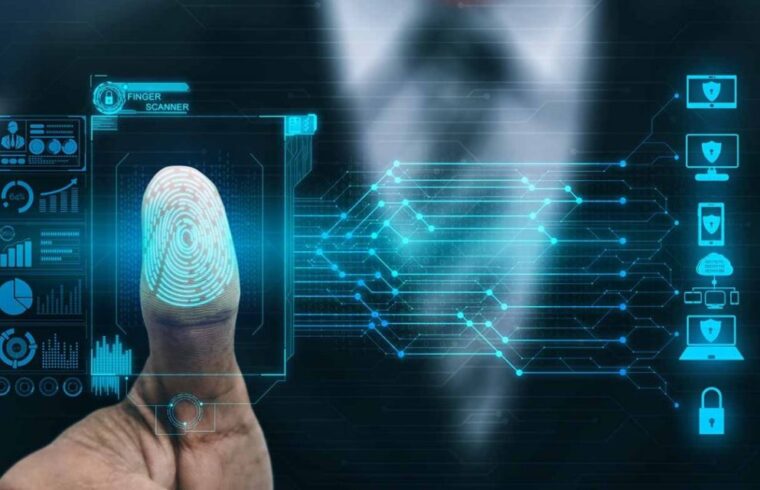
Have you ever found yourself staring at a login screen, racking your brain for that one elusive password? Or perhaps you’ve been guilty of using the same simple password for multiple accounts, just to avoid the headache of remembering dozens of complex combinations? If so, you’re certainly not alone. In our increasingly connected world, where everything from banking to remote work and online shopping demands proof of identity, traditional authentication methods like passwords and PINs have become, frankly, a bit of a nightmare.
The truth is, while familiar, these methods are deeply flawed. We’re asked to juggle a multitude of unique character strings, and the sheer mental load often leads us down the path of least resistance: reusing similar or straightforward passwords. And what’s the consequence of this very human tendency? A wide-open invitation for hackers. According to sobering statistics, like those from Verizon’s Data Breach Investigations Report, a staggering over 80% of hacking-related breaches involve compromised credentials. It’s a stark reminder that as our digital lives expand, the cracks in our conventional security approaches are becoming gaping chasms, exploited by ever more sophisticated cybercriminals.
Defining the Future: What Exactly is Biometric Authentication?
The clamor for both rock-solid security and an effortlessly smooth user experience has never been louder. This is precisely where biometric authentication steps onto the stage, not just as a buzzword, but as a genuine game-changer. Imagine for a moment that you are the key – your unique physical or behavioral traits acting as an unbreakable, unforgettable password. That’s the essence of biometrics.
When we talk about what is biometric authentication, we’re simply referring to the process of confirming your identity based on characteristics that are inherently, uniquely yours. Think of your fingerprint, the intricate patterns of your face, or even the distinctive rhythm and tone of your voice. Unlike a password that can be forgotten, lost, or stolen, these markers are deeply personal, far less susceptible to interception, and nearly impossible for someone else to replicate. This intrinsic link to your unique self helps to address many of the fundamental vulnerabilities plaguing traditional authentication systems.
Unlocking the Power of You: The Core Benefits of Biometric Security
Security Beyond the Keyboard: How Biometrics Fortify Your Digital Life
The most compelling draw of biometric authentication lies in its profound connection to your unique attributes. We’re talking about methods like:
- Fingerprint recognition: A quick touch, and you’re in.
- Facial mapping: A mere glance, and access is granted.
- Voiceprint identification: Your unique vocal patterns confirm your identity.
- And even more advanced techniques such as iris or retinal scans.
Each of these methods offers an unparalleled level of authenticity. Can you imagine a hacker “stealing” your unique voice or the intricate patterns of your eye? It’s virtually impossible to replicate, providing a robust layer of protection that conventional methods simply can’t match.
What’s more, many savvy businesses are now integrating biometrics into what’s known as multi-factor authentication (MFA). This isn’t just about replacing passwords; it’s about adding layers of defense. Picture this: your fingerprint acts as one factor, perhaps paired with a traditional password or a PIN as another. Even if an attacker somehow manages to snag one piece of the puzzle, they’re still locked out. And here’s a reassuring thought: biometric data itself is typically encrypted, meaning that even if nefarious actors were to illicitly access it, the jumbled, coded information would be of little to no use to them. It’s like trying to bake a cake from a recipe written in an alien language – without the key, it’s just gibberish.
Seamless Access, Effortless Experience: The Convenience Factor
Beyond the formidable security, biometrics sweeps away much of the frustration we associate with logging in. There’s no fumbling for your phone to check a code, no desperately trying to recall that complex string of characters you set six months ago. Unlocking your smartphone, for instance, often takes literally a second with a simple thumbprint or a quick glance. Think about it: a system that is both more secure and more convenient. It’s a win-win, isn’t it?
Navigating the Nuances: Privacy, Ethics, and the Responsible Path Forward
It’s entirely understandable to feel a flicker of concern when discussing the collection of deeply personal information like your biometrics. Unlike a password, which can be easily changed if compromised, your fingerprint or iris “can’t be reset.” This raises important privacy and ethical questions.
Fortunately, the industry is well aware of these concerns. Most reputable biometric systems don’t actually store raw images of your fingerprint or face. Instead, they transform these unique characteristics into encrypted digital templates. Think of it like this: your physical key isn’t stored, but rather a complex mathematical blueprint of that key is saved. This sophisticated process means that the original biometric data cannot be reconstructed from the stored template, adding an incredibly robust layer of protection and mitigating the risk associated with a potential data breach. Your unique “digital signature” is secure, not your actual biological data.
Furthermore, leading privacy frameworks, such as Europe’s comprehensive General Data Protection Regulation (GDPR) and various local privacy laws worldwide, are diligently setting the standards for how biometric information is collected, stored, and processed. Forward-thinking organizations are becoming increasingly transparent, empowering users to review, control, or even delete their stored biometric data. This commitment to user control is crucial for building trust.
Ethical deployment also means ensuring that this powerful technology doesn’t inadvertently discriminate. We need to be vigilant that biometric systems recognize people accurately across all age groups, ethnicities, and abilities. Thoughtful design, rigorous testing, and continuous oversight are vital to ensure that biometric solutions truly serve the broadest possible audience without compromising individual rights or fostering bias.
Biometrics in Action: Where We See It Today
The adoption of biometric technology isn’t just theoretical; it’s happening all around us, with leading sectors channeling significant resources into this innovation. It’s transforming how we interact with critical services:
Healthcare’s Precision Touch
In healthcare, patient verification through biometrics is a monumental leap forward. It dramatically reduces the risk of matching the wrong medical records to the wrong patient – an issue with potentially life-threatening consequences.
Fortifying Finance
Financial institutions are embracing biometric-backed security for everything from quick ATM withdrawals to secure online payments. This not only bolsters the fight against fraud but also significantly speeds up service delivery, making your banking experience smoother and safer.
Government’s Grand Vision
Government-driven initiatives are also gaining impressive momentum, with agencies globally implementing nationwide biometric IDs and streamlining border controls for enhanced security and efficiency.
Your Pocket, Your Key: Consumer Tech Integration
And let’s not forget consumer tech giants. Companies like Apple, Samsung, and Google have normalized biometrics, baking fingerprint sensors and facial recognition directly into the very devices we carry every day – our smartphones and laptops. This pervasive presence has made biometric authentication an everyday convenience rather than a futuristic concept.
The growth trajectory for biometrics is accelerating worldwide. New startups are consistently entering the market, while established corporations are scaling up their research and development investments. Industry analysts paint a clear picture: biometric market revenues are predicted to soar into the billions within the next few years, underscoring both surging adoption rates and relentless innovation on a global scale.
The Road Ahead: Future Innovations and the Promise of Digital Identity
The recent global pandemic provided an undeniable push towards contactless systems, propelling new research and development into touch-free biometric modalities like voice and enhanced facial recognition. This shift isn’t just about hygiene; it’s about expanding the versatility and accessibility of biometric solutions.
Looking further down the road, there’s exciting exploration into integrating biometrics with emerging technologies like blockchain. Imagine a world where you have unprecedented ownership and control over your own digital identity – a truly decentralized model that promises to make identity theft considerably more difficult. While these decentralized models hold immense promise, they also demand careful planning, industry-wide standardization, and broad stakeholder cooperation to realize their full potential.
Even as the future is being shaped, the central focus remains on inclusivity. This means ensuring that these powerful systems recognize people accurately and fairly across all age groups, ethnicities, and physical abilities. Technologies like behavioral biometrics, which subtly assess how you type, walk, or even interact with your device, are gaining prominence. These passive forms of authentication could soon become an invisible, yet incredibly potent, part of our everyday security toolkit.
Biometric authentication is not a static solution; it’s a dynamic shield, continually evolving and adapting to new threats and user needs. It will undoubtedly remain a crucial layer in the multifaceted approach required for robust, future-proof digital security. Are you ready to embrace a world where you are your own most powerful password?









