Picture this: a world where our cities breathe cleaner air, our energy grids are more resilient than ever, and transportation seamlessly integrates with renewable power. Sound like a distant dream? Well, it’s not as far off as you might think! As electric vehicles (EVs) rapidly become the heartbeat of modern mobility, the conversation has shifted dramatically. We’re no longer just talking about simple charging points; we’re witnessing a profound transformation of EV charging systems into sophisticated, integrated energy hubs. Think solar generation, cutting-edge battery energy storage systems (BESS), and intelligent grid connections all working in harmony.
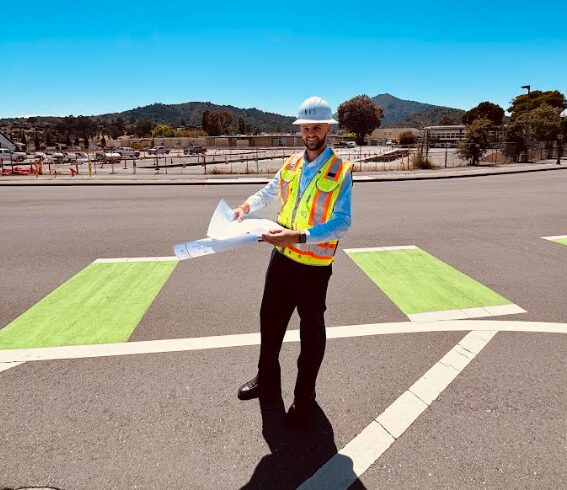
This isn’t just about plugging in your car; it’s about building the very foundation of sustainable, resilient urban development. And who better to guide us through this intricate landscape than someone living and breathing it? We recently had the privilege of gaining insights from Anatolii Burlakov, a seasoned Energy Project Manager whose expertise spans EV infrastructure design, renewable energy integration, and distributed grid applications. He painted a vivid picture of how EV charging isn’t just supporting clean transportation, but is actively shaping the urban landscape and the future of green energy.
The Evolution of EV Charging: From Simple Utility to Urban Backbone
Remember the days when a gas station was just a gas station? A standalone point of utility, serving a single purpose. Well, modern cities are now reimagining EV infrastructure not as fleeting pit stops, but as a permanent, foundational layer of their energy and mobility ecosystems. This isn’t just about replacing fossil fuels; it’s about a smarter, more integrated approach to city planning. Unlike those bulky, often noisy gas stations, EV charging nodes offer incredible flexibility. They can be modular, elegantly embedded directly into building architecture, or strategically co-located with existing infrastructure like parking garages, bustling retail centers, or major transportation hubs.
As we see an exciting surge in charging station density, a critical need emerges: the imperative for smart planning, robust power availability assessment, and advanced energy modeling. Cities that proactively weave EV infrastructure into their long-term zoning plans, meticulously forecast electrical loads, and align it with comprehensive transportation policies stand to reap immense benefits. We’re talking about far more than just emission reductions here; envision improved grid performance, reduced strain on local utilities, and tangible public health outcomes from cleaner air. Isn’t that a future worth building?
System-Level Integration: Solar, BESS, and Bidirectional Control – The Smart Grid Revolution
Here’s where things get truly exciting. EV charging infrastructure transforms from merely valuable to exponentially more valuable when we integrate it seamlessly with other distributed energy resources (DERs). Imagine a charging station not just drawing power, but actively participating in the energy dance. This is precisely what’s happening. An increasing number of public and commercial charging stations now boast co-located solar PV panels and battery storage systems, effectively forming self-contained microgrids. These miniature powerhouses aren’t just cool; they’re incredibly functional, allowing us to:
-
Store excess solar generation for off-peak or nighttime charging: Think of it like a smart energy piggy bank. Why let that sunshine go to waste?
-
Alleviate grid congestion during peak demand through discharge cycles: This is often called peak shaving or demand limiting. Instead of stressing the main grid, these integrated systems can supply power when demand is highest, smoothing out energy spikes.
-
Provide frequency regulation or ancillary services through aggregators: This turns charging stations into active participants in maintaining grid stability, a crucial role often performed by large power plants.
-
Participate in demand response or vehicle-to-grid (V2G) programs: This is perhaps the most transformative aspect. Imagine your idle EV, while parked, giving power back to the grid when needed, acting as a flexible, mobile energy asset. Your car literally becomes part of the solution!
Of course, unleashing these powerful capabilities isn’t magic. It demands sophisticated energy management systems (EMS) that are capable of real-time monitoring, dynamic scheduling, and strict adherence to interconnection protocol compliance (like IEEE 2030.5 or OpenADR). In this brave new world, EV charging stations are no longer just simple outlets; they become intelligent energy endpoints, fully integrated into the intricate web of the smart grid infrastructure. It’s truly a paradigm shift.
Applied Experience: Battery-Backed Chargers and Data-Driven Optimization at EVCS
Theory is great, but what about real-world application? Anatolii Burlakov’s experience at EVCS, a prominent network operator on the U.S. West Coast, provides a fascinating glimpse into this future. During his time there, Anatolii was instrumental in adapting Level 2 and DCFC (Direct Current Fast Charging) stations with embedded lithium-ion BESS. What was the driving force behind these configurations? Simple: to mitigate crippling demand charges, support clever energy arbitrage, and crucially, maintain service availability in locations where the grid might be constrained or where backup power is absolutely critical. Think about it – a charger that keeps working even when the main grid falters, powered by its own battery bank!
But it wasn’t just about the hardware. On the software and operations side, Anatolii also pioneered the development and maintenance of Tableau-based analytics tools. These weren’t just pretty dashboards; they were the eyes and ears of the network, visualizing performance in real time. Imagine instantly knowing uptime percentages, utilization metrics, detecting faults before they become major issues, and receiving predictive maintenance alerts. This invaluable data wasn’t just for show; it directly informed infrastructure expansion strategies and ensured optimal charger load balancing, leading to tangible improvements in ROI and network reliability. This is the power of data-driven decision-making in action!
Furthermore, EVCS actively explored the feasibility of smart-charger-grid integration scenarios. This involved intricate balancing acts, like aligning EV load profiles with solar generation curves and navigating localized grid constraints, especially challenging in California’s highly regulated energy markets. It’s like a complex choreography where every electron dances to the right tune.
Integrated Engineering Solutions at NV5: Infrastructure by Design
Taking this holistic vision even further, Anatolii Burlakov now contributes to multidisciplinary energy infrastructure projects at NV5. Here, the philosophy is simple yet profound: embed EV charging systems from the very beginning of a project, not as an afterthought. Forget patchwork retrofit solutions! NV5’s approach involves integrating EV charging with PV arrays, BESS installations, and comprehensive building energy management frameworks right from the design phase of new facilities, campuses, and public infrastructure.
What’s the benefit? This proactive strategy allows for: optimized siting, efficient conduit routing, seamless structural accommodation, and precise electrical provisioning from day one. It’s like building a house with plumbing and electricity already considered in the blueprints, rather than trying to add them in after the walls are up. The engineering workflow at NV5 is comprehensive, including:
-
Meticulous load modeling and demand profiling for charging infrastructure, ensuring future capacity.
-
Detailed photovoltaic yield simulation and precise inverter-sizing for maximum solar energy capture.
-
Smart battery bank configuration for time-of-use optimization and ensuring resilience during outages.
-
Rigorous NEC and UL compliance mapping for smooth AHJ (authority having jurisdiction) approvals.
-
Sophisticated utility interconnection design and protection coordination studies, safeguarding the grid.
The result? Engineers craft a truly coordinated energy system that minimizes load instability, drastically lowers peak demand costs, and guarantees business continuity even when network resources are scarce. This isn’t just about charging cars; it’s about building unbreakable energy ecosystems.
The Way Ahead: Intelligence, Grid Synergy, and Ubiquity
So, what does the road ahead look like for EV infrastructure? It’s a path toward seamless, ubiquitous integration with urban systems. As EV penetration continues its exponential rise, every single charging point will morph into a potential node in a vast, distributed, and crucially, bidirectional energy network. Your car won’t just consume energy; it will be a part of the energy fabric itself. To truly realize this ambitious vision, we must collectively accelerate the adoption of:
-
AI-driven load forecasting and adaptive scheduling algorithms: Imagine charging stations that predict your needs and optimize charging times based on grid conditions.
-
Real-time DER orchestration platforms: Software that acts like a symphony conductor, ensuring all distributed energy resources play together perfectly.
-
Cyber-secure communication protocols (e.g., ISO 15118, OCPP 2.0.1): Because a smart grid is only as strong as its weakest link, security is paramount.
-
Standardized grid services participation through aggregator platforms: Making it easy for individual chargers and EVs to contribute to the grid’s health.
Beyond these foundational elements, advanced use cases are also emerging. Think high-density power delivery for massive fleet charging depots, sophisticated multi-tenant EVSE (Electric Vehicle Supply Equipment) management, and the complete electrification of public transit systems. These require robust interconnection strategies and innovative tools like digital twin-based planning, allowing us to simulate and optimize complex scenarios before they even exist. These incredible technical capabilities, however, must be complemented by coordinated urban policy, proactive cross-sector collaboration, and unwavering commitment to resilient design principles. Are we ready to meet this challenge?
Conclusion: Powering Tomorrow’s Cities, Today
It’s clear: infrastructure for EV charging is no longer just an accessory; it is a fundamental component of the urban energy fabric of the future. When integrated with solar and battery storage, managed through intelligent platforms, and aligned with smart grid protocols, EV charging stations offer our cities a truly multifaceted solution. They deliver not only clean, sustainable mobility but also profoundly improve grid stability and lay the groundwork for climate-ready infrastructure.
The journey to fully realize this immense potential demands a symphony of cooperation. Stakeholders across engineering, urban policy, and the energy sectors must work hand-in-hand. Our goal is to build charging ecosystems that are as adaptable, dispersed, and intelligent as the electric vehicles they empower. The future of urban living is electric, and the infrastructure we build today will determine just how bright that future shines. Let’s power it, together.









